

That’s distinct from retained earnings, which are calculated to-date. Retained earnings are an important part of accounting—and not just for linking your income statements with your balance sheets. Retained earnings are a critical part of your accounting cycle that helps any small business owner grow their business. It’s the number that indicates how much capital you can reinvest in growing your business.
Example of retained earnings statement with cash dividends paid
- But as an entrepreneur, startup founder, or small business owner, clarity around your company’s financial health is essential.
- To get a good idea of whether a company is doing well, it helps to look at how ROE has evolved over time.
- Yes, retained earnings can be distributed among shareholders in the form of dividends, but they can also be kept within the company for growth and investment.
- In contrast, a lower yield from a stable or growing company might indicate a safer, more sustainable dividend.
Gaining Investor ConfidenceInvestors and lenders scrutinize retained earnings during due diligence. Negative retained earnings (accumulated deficit) isn’t a dealbreaker for startups, but you need to explain the growth strategy behind it. Not because the math is hard, but because the concept sits at this weird intersection of profit, cash flow, and equity that most business guides gloss over. The “Retained Earnings” line item is recognized within the shareholders’ equity section of the balance sheet. The simplest way to know your company’s financial position is with an expense management platform that tracks operational activities in one place. Indirectly, therefore, retained earnings are affected by anything that affects the company’s net income, from operational efficiencies to new competitors in the market.
- In the tab labeled Problem 3, I provide income statements, statements of retained earnings, and balance sheets for Tim Russet & Company (Russet).
- This formula tells investors how much dividend income they receive per share of stock they own.
- You can find the dividend payout ratio by subtracting the retention ratio percentage from 100%.
- The number of shares remained unchanged throughout the year, as Nova did not make any new issues during 2021.
- It’s one of those numbers that quietly grows in the background when things are going well, or shrinks when losses pile up.
- The amount of the debit and credit should be equal to the current balance of the revenue account.
Earnings Per Share (EPS)
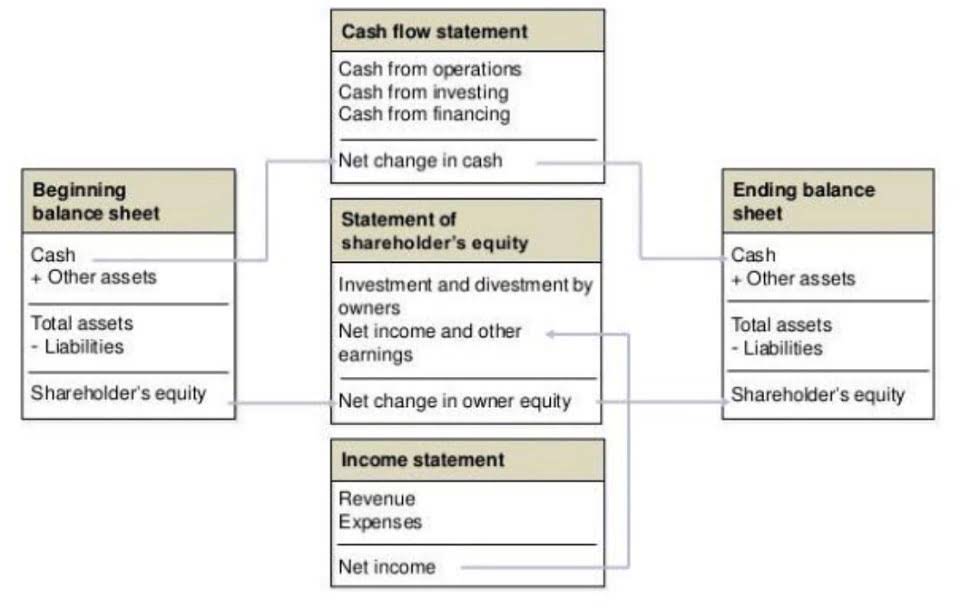
These three core statements are intricately linked to each other and this guide will explain how they all fit together. By following the steps below, you’ll be able to connect the three statements on your own. Yes, if revenue is earned but not yet collected, it is called an accounts receivable. You can use it to make comparisons between companies within the same industry, as well as to assess trends over time. It’s a good idea to look at the larger context when analyzing ROE, not just relying on one calculation in isolation. If unusual or large items cause the net income (numerator) or equity (denominator) to go up or down, then the calculated ROE may not be reliable.
How are the Income Statement and Balance Sheet Linked?
Use a retained earnings formula to track how much your business has accumulated. The statement of retained earnings can be created as a standalone document or be appended to another financial statement, such as the balance sheet or income statement. The statement can https://dhakainfotech.com/lemonade-stand-accounting-hiring-tax-preparer-in/ be prepared to cover a specified cycle, either monthly, quarterly or annually. In the United States, it is required to follow the Generally Accepted Accounting Principles (GAAP). Revenue is the total income earned from sales before expenses, while retained earnings are the profits left after all expenses and dividends are deducted.
The change in net working capital (NWC) captures the difference between the prior period and current period net working capital (NWC) balance. For example, Capex should be payroll subtracted from the PP&E balance if using the negative sign convention for expenses and expenditures – i.e. the double-negative makes a positive (+). Instead, the depreciation expense – i.e. the allocation of the Capex amount across the useful life assumption – reduces the recorded value of the fixed asset (PP&E) on the balance sheet. ” is one of the most common accounting interview questions asked in investment banking interviews. And, historically speaking, EPS has been the standard measurement when comparing stocks and evaluating a company’s profitability. On the other hand, EPS is an easy-to-calculate, readily available way to interpret how much profit a company makes per share.

These reduce the size of a company’s balance sheet and asset value as the company no longer owns part of its liquid assets. Retained earnings provide you with insight into your cumulative net earnings. But several financial statements need to be prepared to calculate retained earnings. One of them is the income statement, and you’ll need to process expenses to put this statement together.
How to calculate retained earnings: Formula & example
If there were no dividends paid out, you don’t need to do any other adjustments from step two. Otherwise, subtract the full amount of dividends paid from the amount calculated in step two. While retained earnings signal the potential for wealth creation through reinvestment, they do not equate to immediate financial affluence. Their essence is strategic, more a story of growth and potential than a snapshot of wealth. Conversely, cash on hand is the literal liquid assets—currency, bank account balances, easily accessible funds—that a company can quickly mobilize for immediate needs, emergencies, or opportunities.
How to Close a Revenue Account: A Comprehensive Guide for Accountants and Business Owners

This classification helps you assess liquidity, solvency, and overall financial health. For example, if your business earns $20,000 in profit after expenses and taxes and doesn’t pay dividends, that full amount becomes retained earnings. Companies reinvest retained earnings to buy equipment, expand product lines, or acquire other businesses. If an investor is looking at December’s financial reporting, they’re only seeing December’s net income.
Are Retained Earnings Different from Revenue?
Understanding these differences prevents confusion and leads to more informed financial planning and decision-making. For example, a company might boast significant retained earnings but struggle with cash flow, which can be problematic in addressing immediate financial obligations. Walking through this example, it’s evident that Zippy Tech is maintaining a healthy cycle of how to calculate retained earnings profit reinvestment while also rewarding its shareholders. It demonstrates a balanced approach to managing earnings that can be conducive to sustainable growth. So, $14,500 would be the final figure to strut onto your balance sheet, ready to roll into the next period’s retained earnings calculation. Dividends are the slices of the profit pie that shareholders eagerly await, representing a reward for their investment in your company.